Rove, Cheney innocent; Powell, Armitage guilty


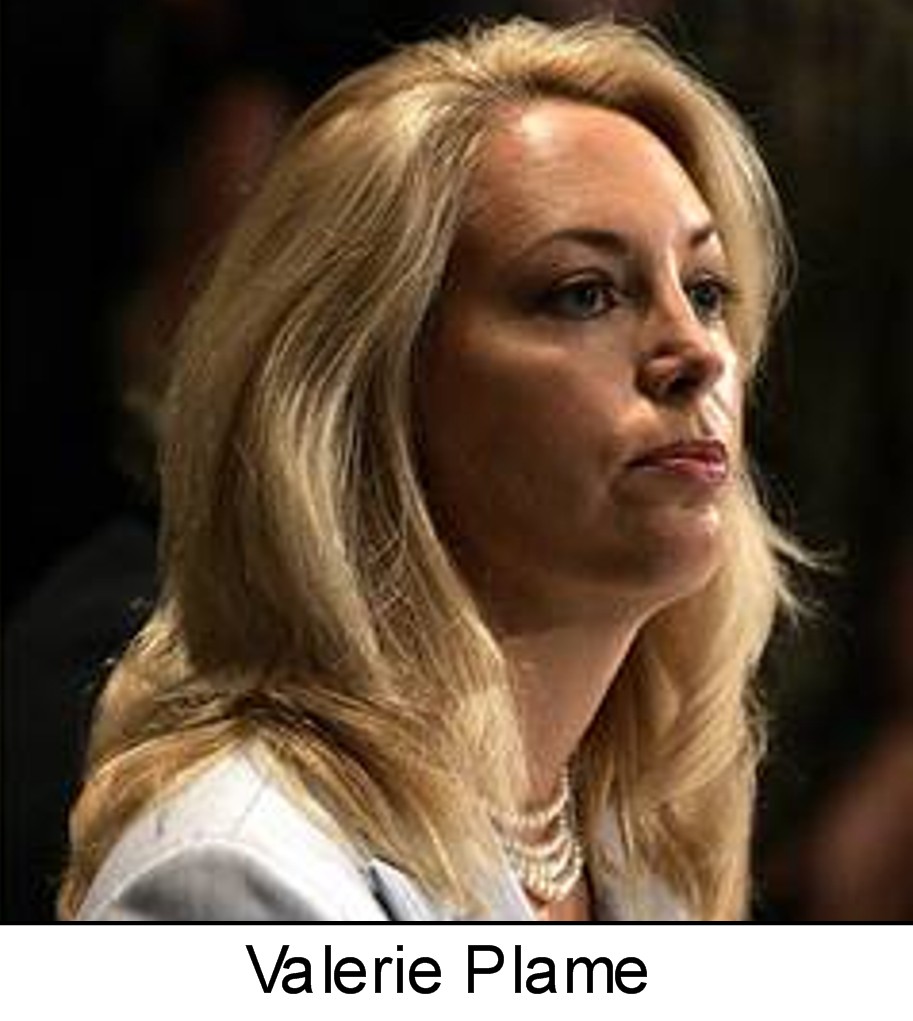
It seems like only yesterday that special prosecutor Patrick J. Fitzgerald was homing in on Karl Rove. Top vice presidential aide I. Lewis Libby, second in command to Vice President Dick Cheney, was said to have leaked the name of Valerie Plame to a reporter and blown her CIA cover, apparently in retaliation for a piece written in the Wall Street Journal by her husband, Joe Wilson, that questioned President Bush’s rational for prosecuting a war in Iraq.

Plame was a CIA analyst and not an undercover agent at the time her name was released. But this made no difference. Hot on the chase and anxious to bag Cheney and Rove, the mainstream media devoted an ocean of ink to the subject, and it was widely speculated that Libby was executing a dirty trick on the Wilsons on orders from Rove, the Svengalli of the Bush administration.

It all turned out to be a lot of sound and fury, signifying nothing.

According to recent more accurate reports in the New York Times, it was not Libby, but rather Richard Armitage, who was the leaker. Armitage, former deputy Secretary of State, was the second in command to former Secretary of State Colin Powell. Armitage inadvertently blew Plame’s CIA non-undercover work to Robert Novak during a chit-chat session, and Fitzgerald knew all about it very early on in his investigation. Armitage also spilled the beans to famed Washington Post writer Bob Woodward, of Watergate fame, before his conversation with Novak.

So then, why did Fitzgerald target Libby rather than Armitage and Novack rather than Woodward? And isn’t the mainstream press just a wee bit distressed at having been manipulated by anti-Rove agents and sources?

The answers to these questions will not be forthcoming anytime soon. The quarry has been bagged, and who cares if Fitzgerald screwed up the works.

Comments

Popular posts from this blog

The Blumenthal Burisma Connection

Steve Hilton , a Fox News commentator who over the weekend had connected some Burisma corruption dots, had this to say about Connecticut U.S. Senator Dick Blumenthal’s association with the tangled knot of corruption in Ukraine: “We cross-referenced the Senate co-sponsors of Ed Markey's Ukraine gas bill with the list of Democrats whom Burisma lobbyist, David Leiter, routinely gave money to and found another one -- one of the most sanctimonious of them all, actually -- Sen. Richard Blumenthal."

Taking The Fifth, After Esty

Whether or not U.S. Representative Elizabeth Esty will serve the remainder of her term or resign immediately is very much an open question. But, in any case, the battle for Connecticut’s 5 th U.S. Congressional District has begun with a show of unexpected fireworks. For many years, the 5 th District was a toss-up proposition; both Republicans and Democrats have held and surrendered the seat. Geographically the 5 th District touches the border of New York from Connecticut’s northern-most point to Danbury in the southern quadrant and includes much of Litchfield county and parts of Fairfield, Hartford and New Haven counties. Party affiliation is competitive, in round figures, 30 percent Democrat, 25 percent Republican and 45 percent unaffiliated. Over the years, the Democrat Party in Connecticut has moved from the center to the left, but the 5 th District has been a moderate preserve. During the Obama presidential election, Republican moderates within Connecticut's U.S. ...

PCBs, GOOD FOR YOUR HEALTH

By Gerald and Natalie Sirkin c2007 A front-page story on PCBs in the March 9 News-Times is just wrong. The first thing to know about PCBs is that they never killed a single person nor did they ever cause cancer. The second is that although they are invariably called “cancer-causing,” that designation comes chiefly from a single rat study. The third thing is that the subject rats were exposed daily for 21 months to 100 parts per million (ppm) of PCBs containing 60% chlorine. (The 100 ppm was about 5,000 times the tolerable daily intake of PCBs set by FDA in 1973.) When rats were exposed to PCBs containing less chlorine, they developed no cancers. The fourth, that when the exposed rats were allowed to live out their lives, they had fewer cancers and lived longer than the unexposed rats. PCBs is a family of chemicals known as polychlorinated biphenyls. PCBs contain chlorine ranging from 12% to 70%. They were used in two General Electric plants that manufactured electrical equipmen...